Français
A sophisticated mechanism that allows plant roots to quickly respond to changes in soil conditions has been identified by an international research team.
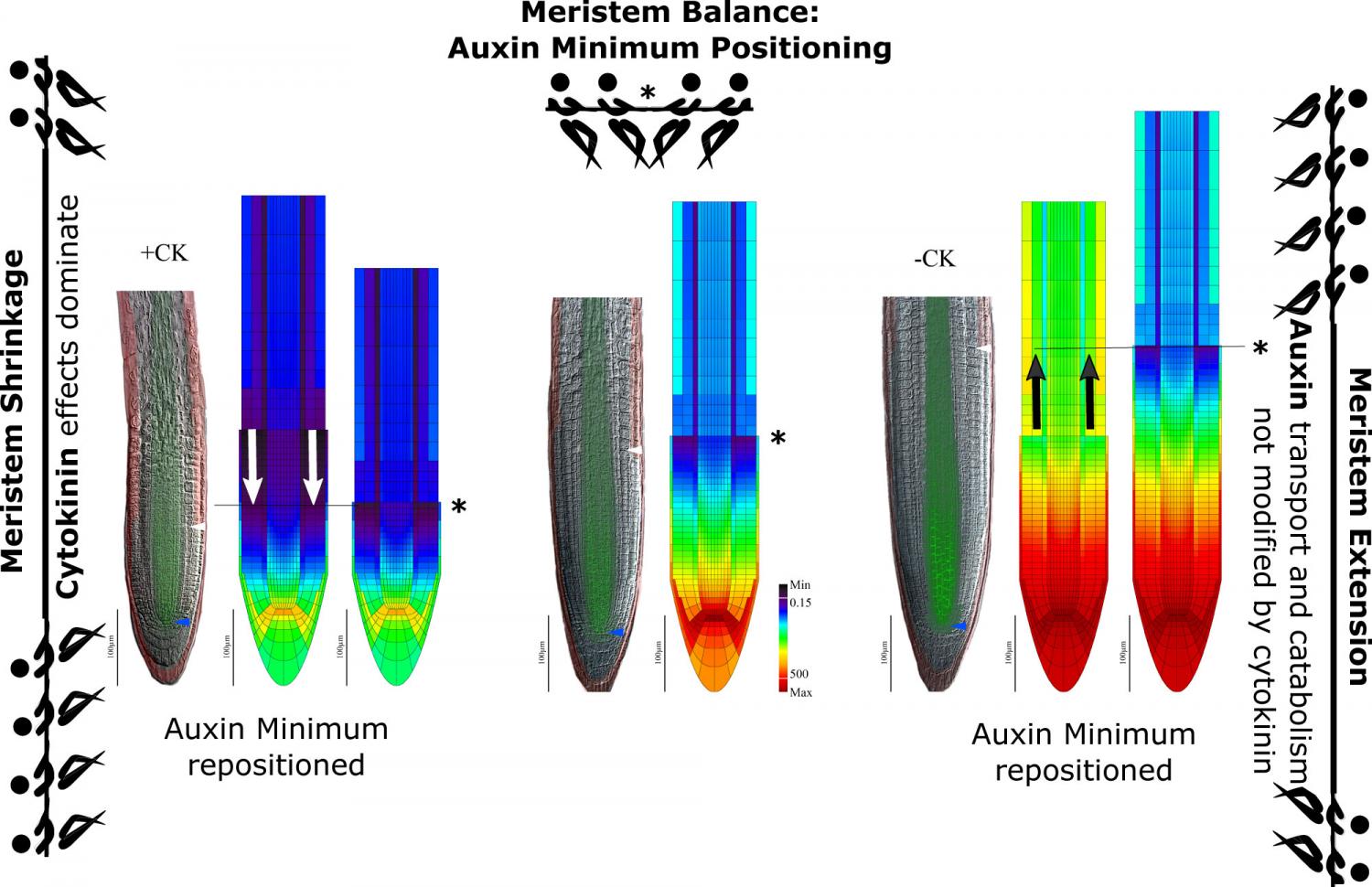
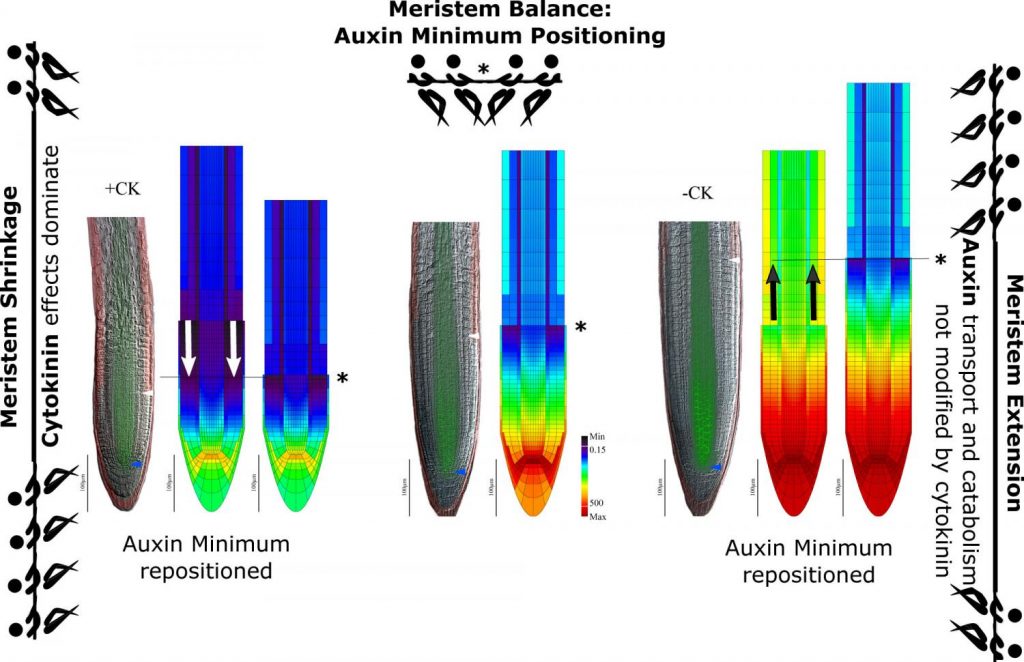
Scientists from the John Innes Centre and Sapienza University, Rome, combined mathematical and computer modelling with molecular genetics to show how roots can regulate their growth via the interactions of two antagonistic hormones, auxin and cytokinin.
As the root grows and meristem cells at the tip continuously divide, they are left behind in relation to the moving root tip. When these cells reach a certain distance from the tip, called the transition position, they stop dividing and instead start elongating until reaching their maximum lengths.
But how do cells “know” when they have reached the transition position between division and elongation? What signal do they read out?
This, explains Dr Veronica Grieneisen of the John Innes Centre, is down to something called positional information, which is a common feature in all developing organisms:
“Cells, although initially all identical, need to change fate or behaviour according to where they are located in the embryo or organ. This is positional information.”
To solve the puzzle the teams of Dr Grieneisen and Dr Stan Marée from the John Innes Centre needed to discover what “positional information” is available at the transition zone to enable cells to know they are at the right location to transit behaviour from dividing (meristem zone) to elongating (elongation zone), and how this information is established and positioned.
Read more at: https://phys.org/news/2017-08-hormonal-tug-of-war-roots-journey-soil.html#jCp